
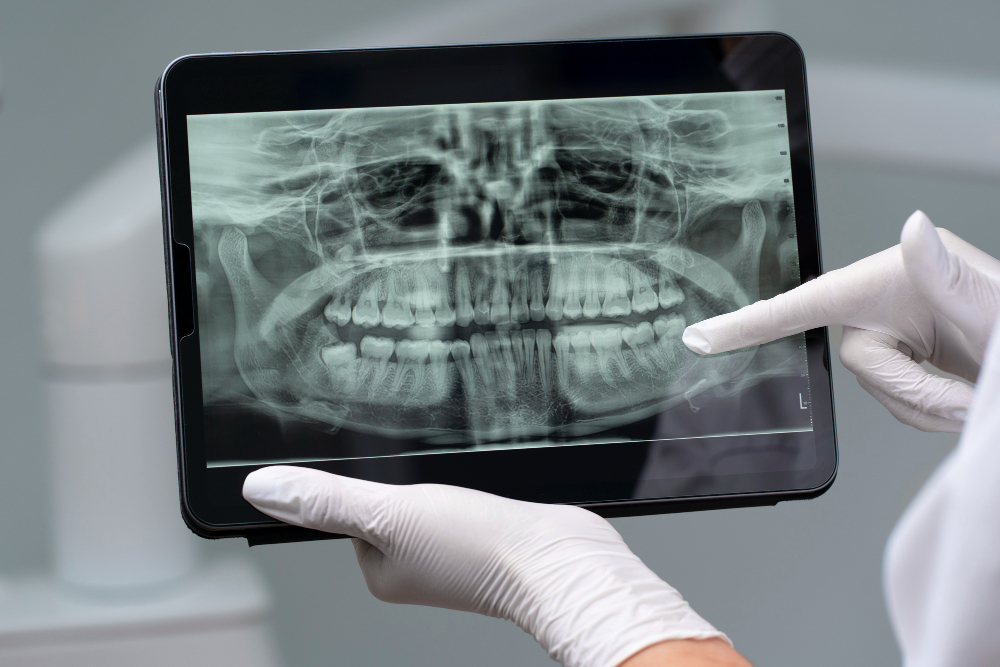
What is OPG (Orthopantomogram)?
An OPG, or Orthopantomogram, is a special type of dental X-ray. It shows a wide view of your jaws, teeth, and surrounding bones. Many dentists and radiologists use OPG scans to check for dental problems. This dental X-ray OPG helps spot issues that may not be seen with a regular X-ray. Because it covers both jaws in one image, it is very useful for dental care.
Why is OPG Done? (Purpose and Indications)
Often, dentists order an OPG scan for several reasons. For example, it helps to:
Additionally, an orthopantomogram procedure can help find hidden dental issues. It is also used before some surgeries or treatments. According to the World Health Organization, dental X-rays like OPG are safe and helpful for diagnosis.
How is an OPG Performed? (Procedure and Patient Experience)
First, you will be asked to stand or sit in front of the OPG machine. Next, a technician will help you place your chin on a small rest. You may need to bite gently on a plastic piece to keep your mouth steady. Then, the machine will move around your head. It takes a picture of your jaws in just a few seconds. You will not feel any pain during the OPG scan. The whole process usually takes less than 10 minutes.
Benefits and Advantages of OPG
There are many OPG benefits for both patients and doctors. Some of the main advantages include:
Because of these benefits, OPG scans are a popular choice in dental clinics.
Safety and Risks of OPG
Most people can safely have an OPG scan. The amount of radiation is very low. In fact, it is much less than a chest X-ray. However, pregnant women should tell their doctor before the scan. Sometimes, your doctor may suggest waiting until after pregnancy. According to the CDC, dental X-rays are safe when used properly. Still, always follow your dentist’s advice.
How to Prepare for an OPG
Preparing for an OPG scan is simple. Usually, you do not need to fast or change your routine. However, you should:
Because the procedure is quick, you can return to your normal activities right after.
What to Expect After the Procedure
After your OPG scan, you can go home or back to work right away. There is no recovery time needed. Your dentist or radiologist will review the images. Then, they will discuss the results with you. If any problems are found, your doctor will explain the next steps. Most people do not have any side effects from an OPG scan.
Frequently Asked Questions About OPG
In summary, an OPG scan is a safe and helpful tool for dental care. It helps your dentist see your whole mouth in one image. If you have questions about OPG or need a dental X-ray OPG, consult a radiologist or dental specialist at TRIVENI DIAGNOSTICS AND IMAGING CENTRE for personalized advice.