
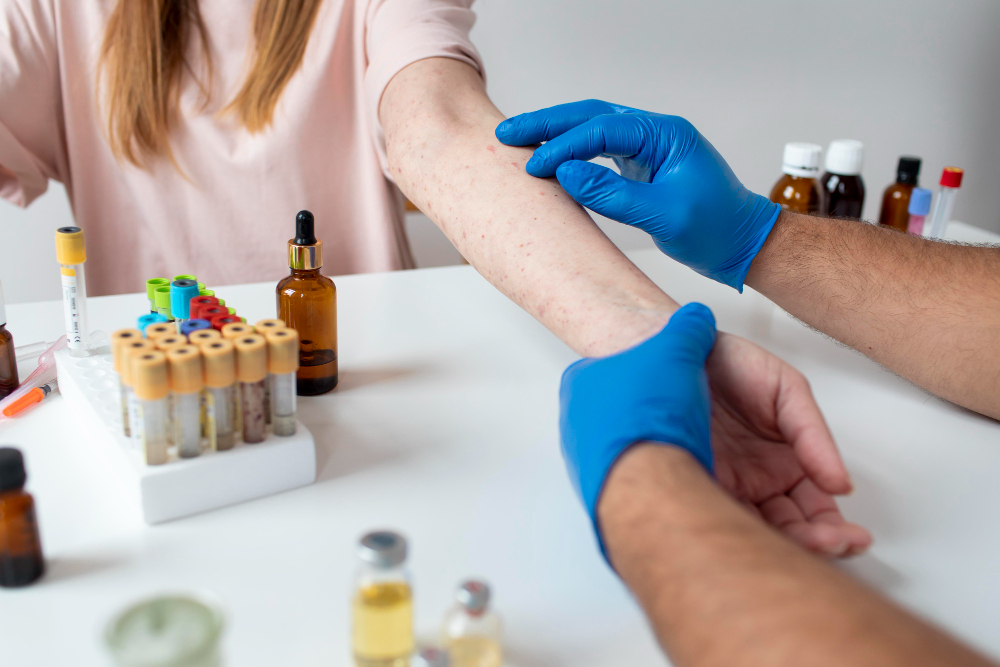
What Is an Allergy Panel Test?
An Allergy Panel Test helps find out if you have allergies. It checks your body’s reaction to many common allergens. These allergens can include foods, pollen, dust, or animal dander. The test is often done with a small blood sample or a skin prick. Because allergies can cause many symptoms, this test helps doctors know what triggers your reactions.
Why Is an Allergy Panel Test Done?
Doctors use the Allergy Panel Test to find the cause of allergy symptoms. For example, you may have sneezing, itchy eyes, or skin rashes. Sometimes, you might have trouble breathing or stomach issues. If you have these problems often, an allergy test can help. Also, knowing your triggers can help you avoid them. This test is useful for both children and adults.
How Does the Allergy Panel Test Work?
The Allergy Panel Test procedure is simple. First, your doctor will ask about your symptoms. Next, they will choose which allergens to test. There are two main types of tests:
Both tests are safe and quick. However, your doctor will decide which test is best for you.
What to Expect During the Test
During the Allergy Panel Test, you may feel a slight pinch or sting. For the skin test, you will wait about 15 to 20 minutes. If you react to an allergen, you may see a small bump or redness. For the blood test, the process is even simpler. After the blood draw, you can return to your normal activities. Most people do not have any side effects. However, let your doctor know if you feel unwell.
Understanding Your Results
After the test, your doctor will explain the allergy test results. If you have a positive result, it means you are likely allergic to that substance. However, a negative result means you probably are not allergic. Sometimes, results can be unclear. In that case, your doctor may suggest more tests or a different approach. Always discuss your results with a healthcare provider. They can help you understand what the results mean for your health.
Risks and Precautions
Although the Allergy Panel Test is safe, there are some risks. For the skin test, you might have mild swelling, redness, or itching. Rarely, a strong allergic reaction can happen. For the blood test, you may have slight bruising or soreness. However, serious problems are very rare. Your doctor will watch for any signs of a reaction. If you have a history of severe allergies, let your doctor know before the test.
When Should You Consider an Allergy Panel Test?
You should consider an Allergy Panel Test if you have:
Also, if over-the-counter treatments do not help, testing may be useful. Your doctor can help decide if this test is right for you.
Frequently Asked Questions
Conclusion and Next Steps
In summary, the Allergy Panel Test is a safe way to find out what causes your allergy symptoms. It helps you and your doctor make better choices for your health. If you have ongoing allergy problems, consult at CENTRE | Triveni Diagnostics and Imaging Center for booking an appointment of allergy panel test.